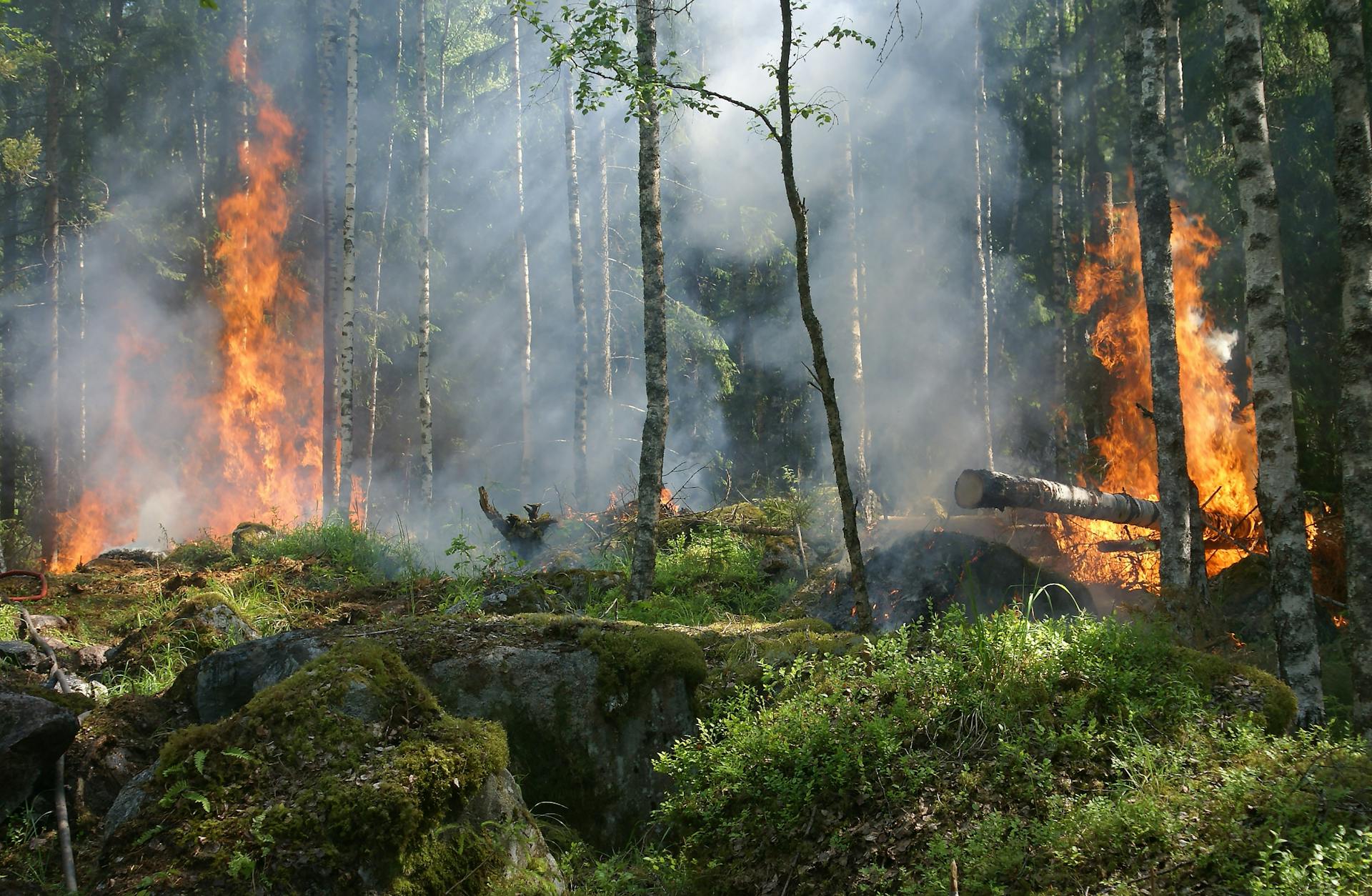
Every summer, British Columbia burns. And every summer, millions of people across the province close their windows, check the air quality app, and assume their home is protecting them. It is not.
The wildfire does not need to be anywhere near you to affect your health. Smoke travels hundreds of kilometres, and the particles that do the most damage are the ones you cannot see — microscopic enough to pass through walls, closed windows, and into your lungs. Here is what most BC homeowners do not know about wildfire smoke, indoor air quality, and what it actually takes to breathe safe air during fire season.
The invisible problem: PM2.5
Wildfire smoke is made up of fine particulate matter called PM2.5 — particles smaller than 2.5 microns in diameter. That is roughly 30 times smaller than the width of a human hair. At that size, they behave more like a gas than a solid. Your walls, weatherstripping, and closed windows slow them down, but they do not stop them.
PM2.5 infiltrates your home through gaps around doors, dryer vents, bathroom exhaust fans, range hood ducts, and — most significantly — the fresh air intake on your furnace. Every building has air leakage pathways, and smoke finds all of them. Studies have shown that indoor PM2.5 concentrations during wildfire events can reach 50 to 80 percent of outdoor levels in homes that are not actively filtering their air.
What the AQI numbers actually mean
The Air Quality Index (AQI) is the number you see on weather apps during smoke season, but most people do not know what the thresholds actually represent.
During BC fire season, many communities regularly hit AQI readings above 300. But even moderate readings matter more than people realize. At AQI 100, the health impact of simply breathing has been compared to smoking several cigarettes a day. At AQI 150 or above, you should be actively treating your indoor air — not just closing windows and hoping for the best.
When to seal vs. ventilate
During an active smoke event, the goal is counterintuitive: you want to seal your home as tightly as possible. This is the opposite of the advice you hear the rest of the year about fresh air and ventilation.
During active smoke events:
- Close all windows and exterior doors
- Close fireplace dampers
- Seal gaps around doors with rolled towels
- Shut off the fresh air intake on your HVAC system
- Avoid using bathroom exhaust fans and range hoods — they pull smoky outdoor air in through other openings
- Run your furnace fan on "continuous" to filter indoor air through your furnace filter
Your furnace filter matters more than you think
Most homes have a standard MERV-8 furnace filter. It catches household dust and larger particles, but it barely touches PM2.5 smoke particles. The difference between filter ratings is significant:
MERV-8
Catches dust, misses most smoke particles
MERV-13
Catches most PM2.5 smoke particles
MERV-16
Catches nearly all — hospital grade
Before you rush out and buy the highest-rated filter you can find, check your system. High-MERV filters are denser and restrict airflow. Some older furnaces cannot handle the pressure drop and will overheat, short-cycle, or freeze the evaporator coil. If your system was not designed for MERV-13 or higher, start there and monitor it. During smoke events, run the fan on "continuous" — not "auto" — so air is constantly being filtered even when the system is not actively heating or cooling.
Portable air purifiers and the DIY alternative
A standalone HEPA air purifier works well for cleaning the air in individual rooms. If you can only afford one, put it in the bedroom and run it at night — you spend a third of your life there, and clean sleeping air makes a measurable difference to how you feel the next day.
If you cannot find or afford a commercial HEPA unit, the DIY Corsi-Rosenthal box actually works surprisingly well. It is a box fan with four MERV-13 filters taped around it in a cube shape, with a cardboard cap on top. It costs about $60 to $80 in parts and can clean the air in a bedroom-sized room almost as effectively as units that cost ten times more. It is not pretty, but it is proven — the design was developed by engineers and has been validated in peer-reviewed research.
What smoke does to your home over time
This is the part most people do not think about until winter comes. Smoke particles are acidic. They settle on every surface — countertops, walls, furniture, clothing. They embed themselves in soft furnishings, carpet fibres, and upholstery. And they get deep into your HVAC ductwork.
If your home was exposed to heavy smoke for days or weeks, those particles are sitting in your ducts, on your furnace components, and in your filter housing. When you fire up the furnace in October, you are pushing those particles right back into your living space. The smell might be faint, but the particles are there — and your lungs know it.
For homes that experienced prolonged smoke exposure, professional duct cleaning and air scrubbing are not luxuries. They are how you stop re-breathing last summer's smoke all winter long.
The morning after: what to do when smoke clears
Once the air quality index drops back to safe levels, the instinct is to throw open every window in the house. Hold off. First, take a few steps to deal with the smoke residue that accumulated indoors:
- Check your furnace filter. If it was working during the smoke event, it is probably dark grey or black. Replace it.
- Wipe down hard surfaces with damp cloths — countertops, shelves, windowsills, light fixtures. Smoke residue is acidic and will damage finishes over time.
- Wash soft furnishings. Throw pillows, blankets, curtains, bedding — anything fabric that was exposed to indoor smoke should be laundered.
- Then ventilate. Once surfaces are wiped and fabrics are in the wash, open windows to flush the remaining airborne particles out.
- Monitor symptoms. If anyone in the home is experiencing lingering coughing, headaches, or respiratory irritation after the smoke clears, consider professional air quality testing.
For most homes, these steps are enough. But if your home was in a heavy smoke zone for an extended period — or if you are noticing a persistent smoky smell when the furnace runs — your ductwork likely needs professional attention.
Smoke season is coming. Prepare now.
If wildfire smoke has been infiltrating your home, your HVAC system may need professional attention. We do air quality assessments, duct cleaning, and smoke odour removal. Call us before next fire season — not during it.
1-877-91-FLOOD (913-5663) — more than three decades restoring BC properties