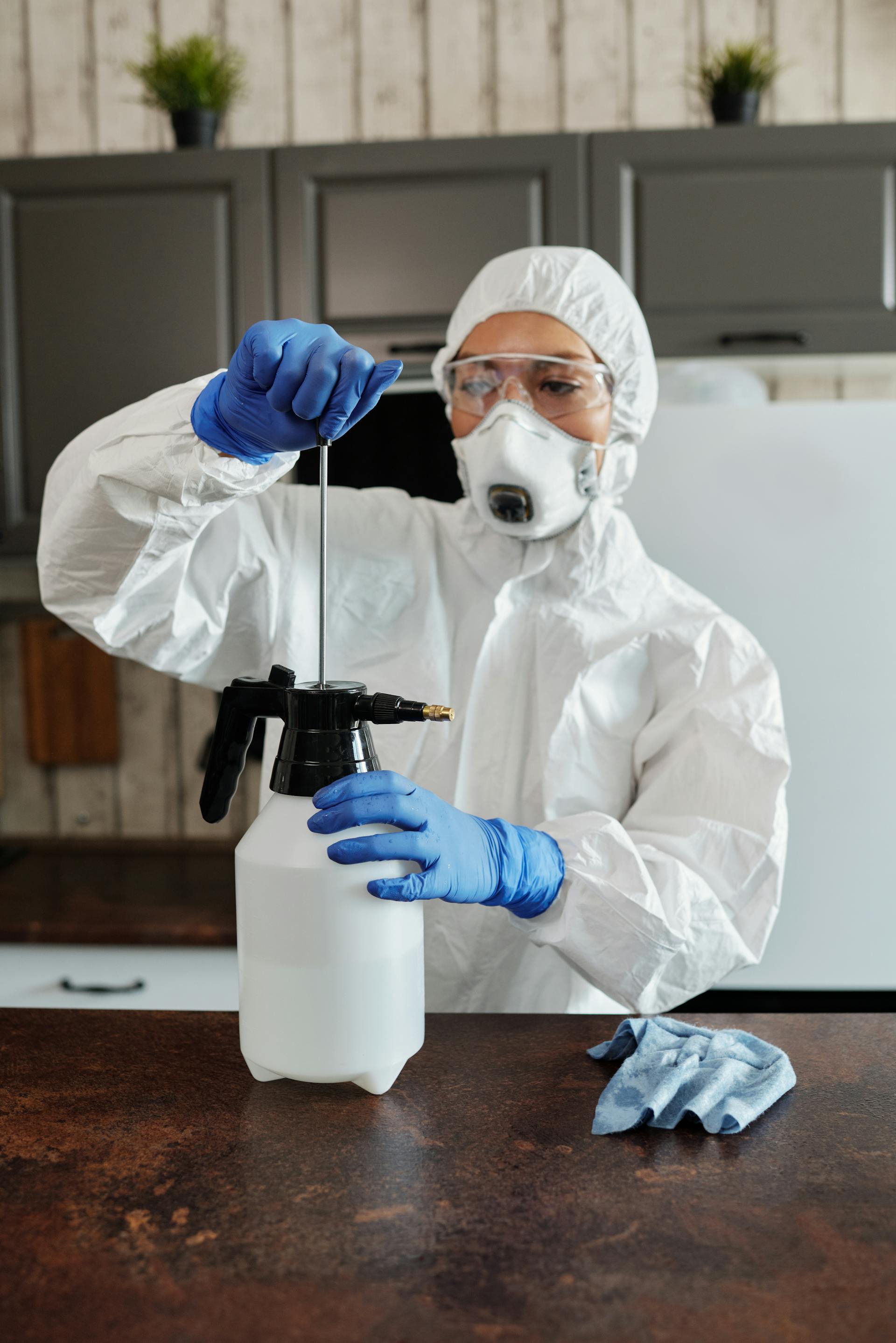
Think of it like surgery. You would not want your surgeon operating in a dusty garage with the windows open. You would want a sterile room, controlled airflow, and zero chance of outside contamination reaching the wound. That is exactly what environmental containment does during restoration work. It turns a section of your home into a controlled environment so that the contaminants we are removing stay where we can capture them — and nowhere else.
It sounds straightforward, and it is. But it is also the step that gets skipped more than any other. And when it gets skipped, what was a contained problem in one room becomes a whole-house problem that costs three times as much to fix.
The Problem With Just Ripping Stuff Out
When you tear out mouldy drywall, asbestos-containing materials, or fire-damaged surfaces without containment, you launch contaminants into the air. Mould spores, asbestos fibres, soot particles — they become airborne the moment you break into the material. And once they are in the air, they go everywhere.
They get pulled into your HVAC system and distributed to every room in your home. They settle on furniture, clothing, bedding, children's toys. A mould problem that was behind one wall in the bathroom is now in the ductwork, the living room carpet, and the bedroom closet. A few thousand dollars of remediation just became a full-house decontamination job. And the worst part? Everyone in the house has been breathing it the entire time.
What Containment Actually Looks Like
Proper containment starts with plastic sheeting barriers — 6-mil polyethylene, sealed to the walls, ceiling, and floor with tape. This creates a completely isolated work zone, physically separated from the rest of your home. Nothing gets in or out except through a controlled entry point.
Inside that zone, we set up negative air pressure machines — air scrubbers that pull air through HEPA filters and exhaust it outside the building. The key principle is simple: the work zone is at lower air pressure than the rest of your home. Air flows in to the containment area, never out. Contaminants physically cannot escape because the airflow is working against them. Every particle we disturb gets captured by the HEPA filtration before it ever has a chance to reach the rest of the house.
We also seal off HVAC registers inside the work zone, cover surfaces that cannot be removed, and establish decontamination procedures for workers entering and leaving. It is a system, not a single step — and every part of it exists for a reason.
Why the Handyman Approach Is Dangerous
Here is a scenario we see regularly. A homeowner finds mould behind a bathroom wall. They call a handyman or a general contractor. The contractor rips out the drywall, maybe sprays some bleach, installs new board, and the job looks great. Everyone is happy — for about a month.
Then the family starts getting headaches. The kids develop a cough that will not go away. Someone notices a musty smell in a room on the other side of the house. What happened? During that demolition — with no containment, no negative air, no HEPA filtration — millions of mould spores were released into the air and spread through the home's air system. The wall looks fixed, but the family has been breathing mould spores for weeks.
The finished product might look identical to what a certified restoration firm would deliver. But what happened during the work is completely different. You cannot un-breathe mould spores. You cannot un-breathe asbestos fibres. The danger is not in the finished wall — it is in the process of getting there.
The Asbestos Problem You Cannot See
In British Columbia, any home built before 1990 could contain asbestos. It was used in drywall compound, texture coat, pipe insulation, floor tiles, ceiling tiles, and dozens of other building materials. You cannot see it. You cannot smell it. It looks like perfectly normal building material. The only way to know is to test it.
WorkSafeBC regulations require testing before any demolition or renovation work in buildings that could contain asbestos. This is not a suggestion — it is the law. Skipping testing and disturbing asbestos-containing materials without containment is illegal, and for good reason. Asbestos fibres are microscopic. Once airborne, they can remain suspended for hours. They are inhaled deep into the lungs where the body cannot break them down. The health consequences — including mesothelioma and asbestosis — can take decades to appear, but they are irreversible.
This is why we test before we touch anything. Every time, no exceptions. If asbestos is present, full containment goes up before a single piece of material is disturbed.
The Numbers Have to Pass
Containment does not come down when the work looks done. It comes down when third-party air quality testing confirms the space is safe. An independent lab collects air samples from the work zone and the surrounding areas, analyzes them, and provides results that either pass or fail. There is no grey area, no judgment call, no visual inspection that substitutes for the data.
This is how you know it is actually clean — not because someone said it looks fine, but because a lab verified the air quality meets safety standards. That clearance report goes into the project file and becomes part of the permanent record for the property. If you ever sell, renovate, or file another insurance claim, you have documented proof the work was done correctly.
The Bottom Line
If someone is doing restoration work in your home without containment, stop them. It does not matter how good the finished product looks if the process contaminated the rest of your house getting there.
Call us. We do every job to IICRC and WorkSafeBC standards — because your family's health is not worth cutting corners.
Get a Free Assessment Asbestos Abatement