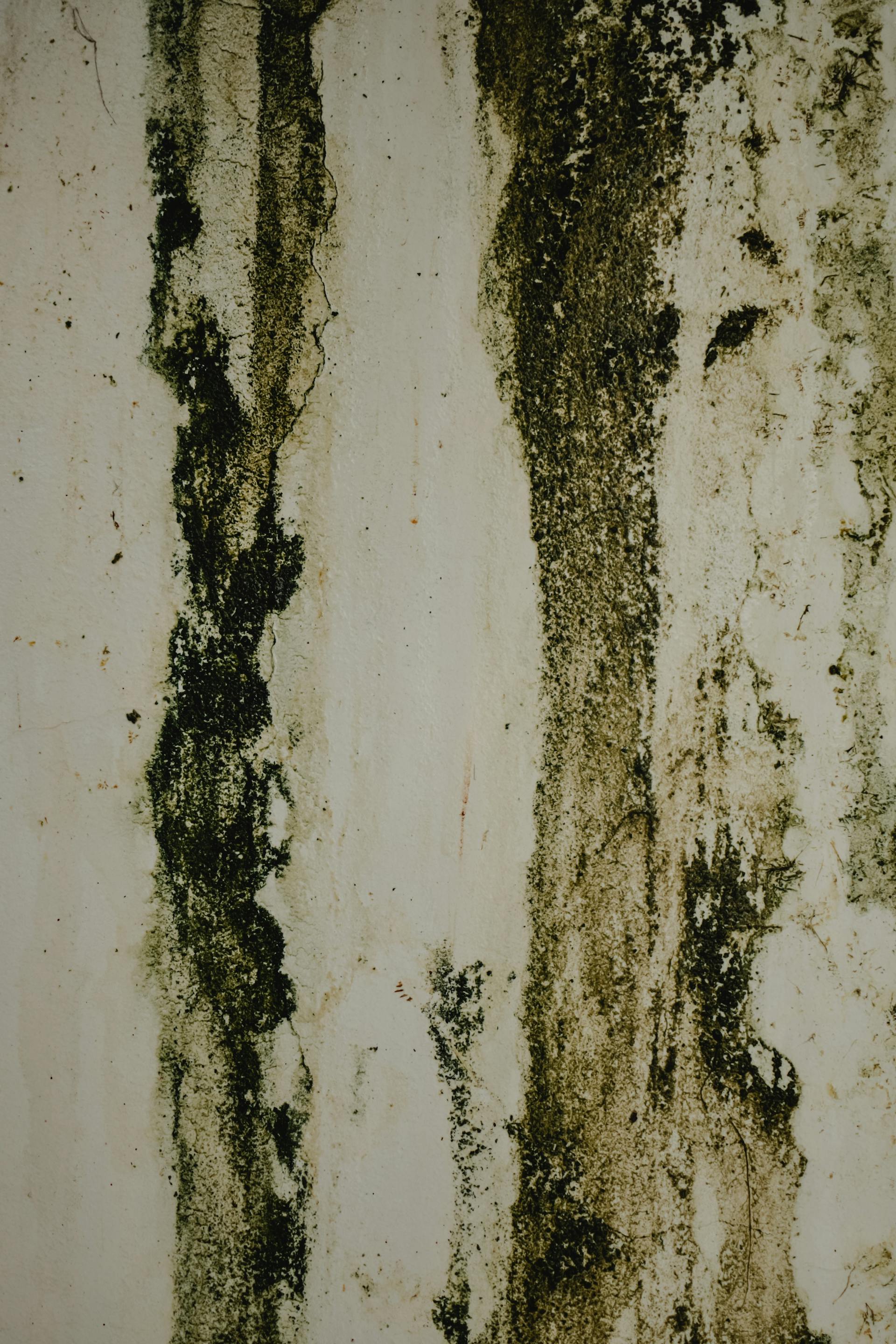
Mould is one of those topics where almost everything the average homeowner believes is either outdated, oversimplified, or flat-out wrong. We do not blame anyone for it. The internet is full of bad advice, and the products on store shelves reinforce the myths. But after more than three decades of remediating mould in homes and commercial buildings across British Columbia, we have seen exactly what happens when people act on those myths. It always costs more to fix the second time around.
Myth #1
"Bleach kills mould."
This is the single most common mistake we see. Bleach does kill surface mould on hard, non-porous surfaces like tile or glass. The stain fades, the area smells clean, and it looks like the problem is solved. On porous materials, though — drywall, wood, grout — bleach cannot reach the roots.
Mould has a root system called hyphae that grows deep into porous materials. Bleach sits on the surface while the water component soaks down and actually feeds the mould at its roots. The surface looks clean. The colony underneath gets stronger. Within two to three weeks, the mould comes back thicker than before. We see this pattern constantly: homeowners who have bleached the same spot three or four times before calling us, each time the regrowth worse than the last.
The fix is not a different cleaning product. It is physically removing the contaminated material and treating what remains with professional-grade antimicrobials designed to penetrate porous surfaces.
Myth #2
"If I can't see it, there's no mould."
Mould does not grow where light is. It grows where moisture is. Behind walls, under floors, inside HVAC ducts, above ceiling tiles, behind kitchen cabinets that sit tight against exterior walls. These are the places mould thrives, and they are the last places anyone looks.
If you can smell that musty, earthy odour, the colony is already well established. And by the time mould becomes visible on a wall surface, the growth behind that wall is usually ten times larger than what you are seeing. The visible patch is just the colony that ran out of room and pushed through to the other side.
If your nose is telling you something is off, trust it. Air quality testing can confirm what is happening behind the surfaces you cannot see.
Myth #3
"A little mould is no big deal."
Every mould colony, no matter how small, is actively releasing spores into your indoor air. Some species also produce mycotoxins — toxic compounds that can cause serious health effects with prolonged exposure. A small visible patch means spores are already circulating through every room connected to your HVAC system.
Respiratory issues, allergic reactions, persistent headaches, chronic fatigue — these are documented effects of ongoing mould exposure. Children, elderly people, and anyone with a compromised immune system are especially vulnerable. What people dismiss as seasonal allergies or a lingering cold is sometimes their body reacting to mould spores they are breathing every day.
There is no safe amount of indoor mould growth. If it is growing, it is producing spores, and those spores are in your air.
Myth #4
"I'll just paint over it."
Mould is a living organism. It feeds on organic material — and the organic compounds in paint and drywall paper are part of its diet. Painting over mould is not a solution. It is a temporary cosmetic cover over an active biological problem.
The mould continues growing behind the paint. It digests the new layer as additional food. Within a few months, the discolouration pushes through, the paint bubbles or peels, and now you have the original mould problem plus wasted time and materials. Even "mould-resistant" paints are designed to prevent new mould from growing on a clean surface — they do not kill or contain existing growth.
You cannot seal in a living organism and expect it to stop. It has to be removed, not covered.
Myth #5
"Mould only grows after flooding."
Mould does not need a flood. It needs moisture — and 60% relative humidity is enough to get it started. A slow leak behind a dishwasher. Condensation forming on cold water pipes in a crawlspace. A bathroom with no exhaust fan or one that vents into the attic instead of outside. A slightly leaking window seal that lets rain seep into the wall cavity for months.
The majority of the mould jobs we respond to did not come from a dramatic event. They came from quiet, persistent moisture that nobody noticed until the smell started or someone got sick. These slow-developing cases are often the worst because the mould has had months — sometimes years — to establish itself before anyone realizes there is a problem.
If you have a moisture source, you have a mould risk. Period. No flood required.