Go into your bathroom right now and turn on the exhaust fan. Now hold a single-ply tissue up to the grille. Does it stick? Good — your fan actually works. Does it flutter around and fall? Congratulations, you own a noise machine.
Most homeowners have never done this test. They hear the fan running, assume it is doing its job, and go about their day. Meanwhile, their bathroom is slowly destroying itself — and possibly the attic above it. We see the aftermath constantly, and it is almost always preventable.
The Tissue Test (Do This Right Now)
Turn your fan on. Hold a single-ply tissue flat against the grille. If the fan has real suction, the tissue sticks and stays. If it does not, your fan is either broken, clogged, or so weak it might as well not exist. This takes ten seconds and tells you more about your bathroom ventilation than most home inspections do.
If the tissue falls, keep reading. If it sticks, keep reading anyway — because even a working fan can be venting into the wrong place.
Your Fan Is Probably Too Weak
Bathroom fans are rated in CFM — cubic feet per minute. A standard bathroom needs a minimum of 50 CFM. Larger bathrooms need roughly 1 CFM per square foot. Got a big ensuite with a soaker tub and a separate shower? You probably need 80 to 100 CFM.
Here is the problem: most builder-grade fans are whatever was cheapest at the supply house that week. They push barely enough air when they are brand new, and performance drops from there as dust builds up on the blades and motor. That is why your mirror still fogs up 20 minutes after a shower. The fan is running. It is just not doing much.
The Real Problem: Where Is That Air Going?
This is the big one. Your fan might actually work — it might pull air just fine — but if the ductwork is wrong, you are pumping warm, humid shower air directly into your attic. We see this all the time, and it is one of the most common causes of attic mould in BC homes.
Here is what typically happens: the fan connects to a flexible duct that runs up into the attic. In theory, that duct should connect to a vent cap on the roof or soffit, pushing the moist air outside. In practice? The duct is disconnected on the other end. Or it is connected but crushed flat where someone stepped on it. Or it has so many kinks and sags that air barely moves through it. Or the flap on the vent cap is stuck shut with paint or corrosion.
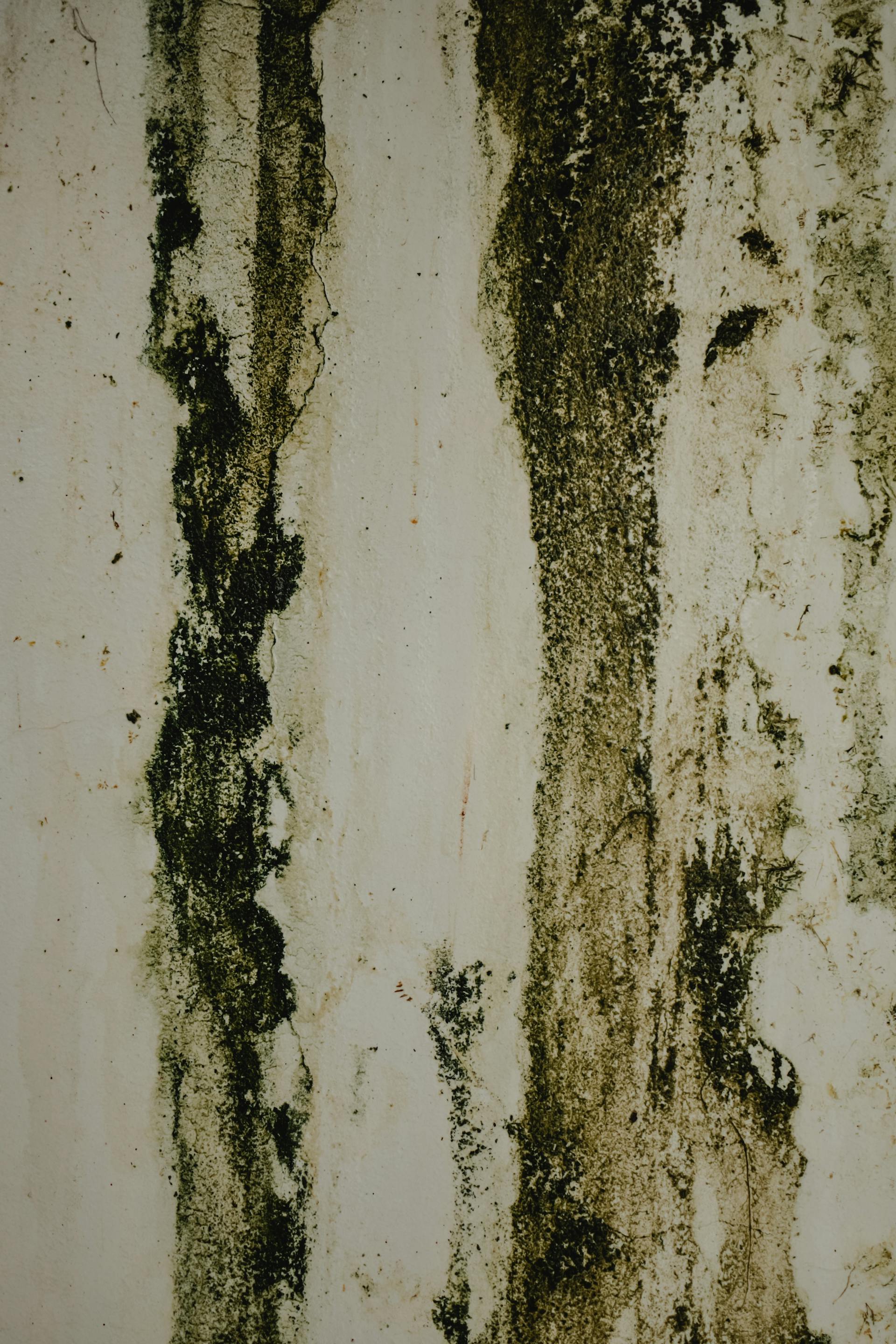
The result is the same in every case: all that warm, moist air hits the cold underside of your roof sheathing and condenses. Every shower, every bath, every time someone runs the hot tap — more moisture, more condensation. Over months and years, you get mould growth on the underside of your roof deck. By the time you notice it — usually when you go up to store Christmas decorations — the damage is extensive.
The 20-Minute Rule Nobody Follows
Even if your fan works perfectly and vents to the right place, there is a good chance you are not running it long enough. Your fan should stay on for at least 20 minutes after you finish showering. That is how long it takes to actually clear the moisture from the room. Most people flip the switch when they walk out and the fan dies with the light.
The fix is absurdly cheap: a $30 timer switch from any hardware store. You press it, it runs for 20 or 30 minutes, and it shuts off on its own. Some newer fans have built-in humidity sensors that kick on automatically when moisture levels rise and shut off when the air is dry. Set it and forget it. This one change prevents more bathroom damage than people realize.
When Was the Last Time You Cleaned It?
If your answer is "never" or "I did not know you could," you are in good company. Most bathroom fans have not been cleaned since the day they were installed. Dust, lint, and hair build up on the grille and the fan blades, and airflow drops off a cliff. Pop the cover off — it usually pulls straight down with a squeeze — vacuum out the dust, wipe down the blades, and snap it back on. Five minutes, and you might be shocked at how much louder and stronger the fan runs afterward. That buildup was choking it.
What Bad Ventilation Looks Like Over Time
If any of this sounds familiar, your ventilation is not keeping up:
- Paint peeling or bubbling on the bathroom ceiling
- Drywall around the tub or shower that feels soft or spongy when you press on it
- Dark spots forming in the ceiling corners
- A musty smell you have gotten so used to you do not notice it anymore
- Mould in the grout lines that keeps coming back no matter how hard you scrub
- Condensation on the bathroom window that never fully clears
None of these are cosmetic problems. They are moisture problems. And moisture problems do not stay in the bathroom — they spread into wall cavities, ceiling joists, and the attic. By the time you see mould on the surface, it has usually been growing behind the wall for months.
The Math That Matters
A proper bathroom fan: $150 to $250 installed. A timer switch: $30. Cleaning the fan you already have: free.
Mould remediation in an attic caused by years of bad venting: $8,000 to $15,000+. Repairing water-damaged bathroom walls and ceiling: $3,000 to $7,000. The prevention costs almost nothing compared to the fix.
Your 15-Minute Bathroom Ventilation Checkup
- Do the tissue test. Fan on, tissue to grille. Sticks = good. Falls = problem.
- Clean the grille and blades. Pop the cover, vacuum, wipe, replace.
- Check your attic (if accessible). Look at the duct — is it connected, intact, and running to an exterior vent? Any dark staining on the roof sheathing?
- Install a timer switch. $30 at any hardware store. Run the fan 20 minutes after every shower.
- Look for warning signs. Peeling paint, soft drywall, persistent mould in grout, musty smell.
Moisture Issues That Will Not Go Away?
If your bathroom has chronic moisture problems, peeling paint, or mould that keeps coming back no matter what you do — the fan might be the root cause. We can assess it. Free, no pressure.
Get a Free Assessment Mould Remediation